

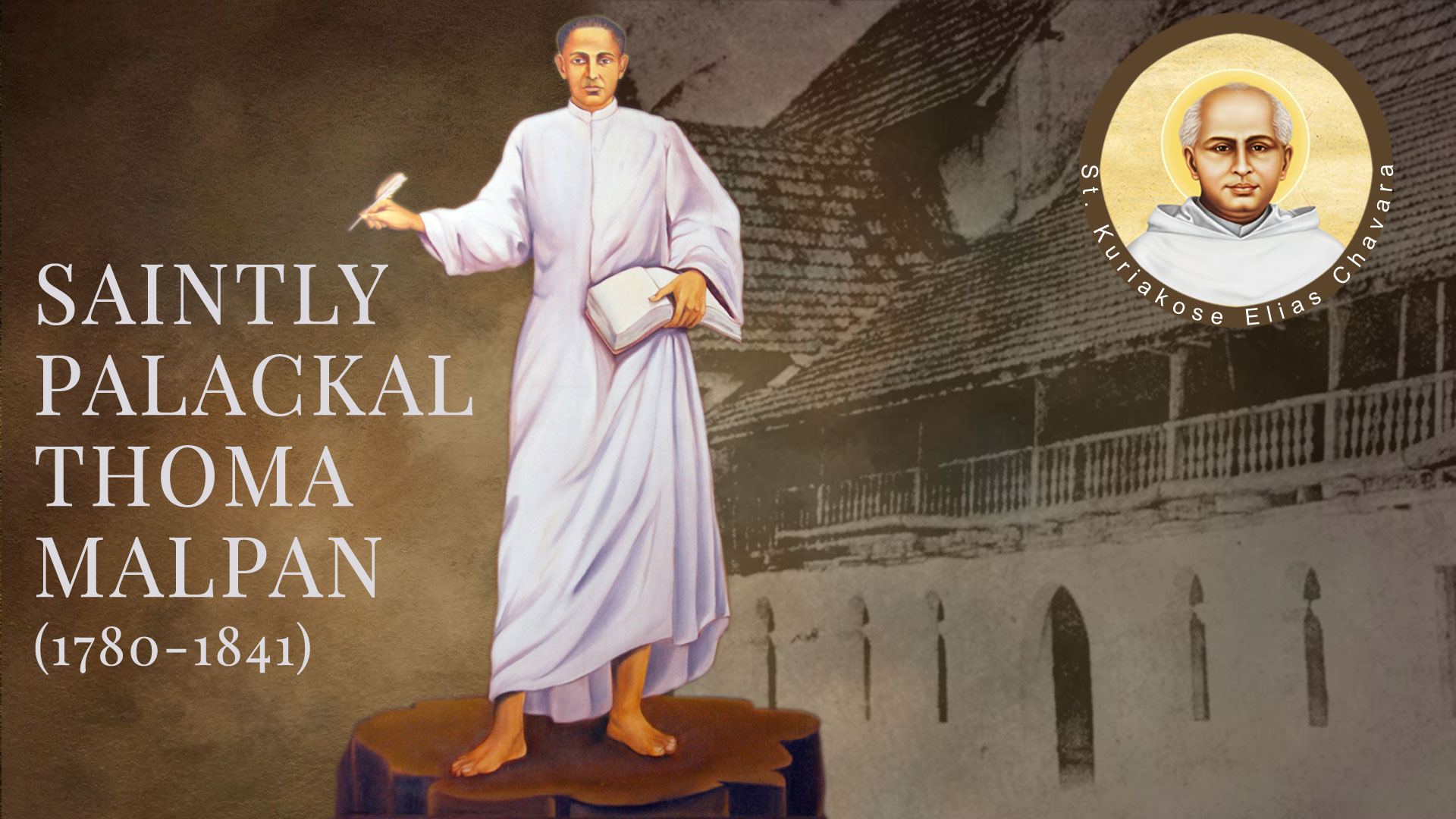
Palackal Thoma Malpan
Call Number: PER - 30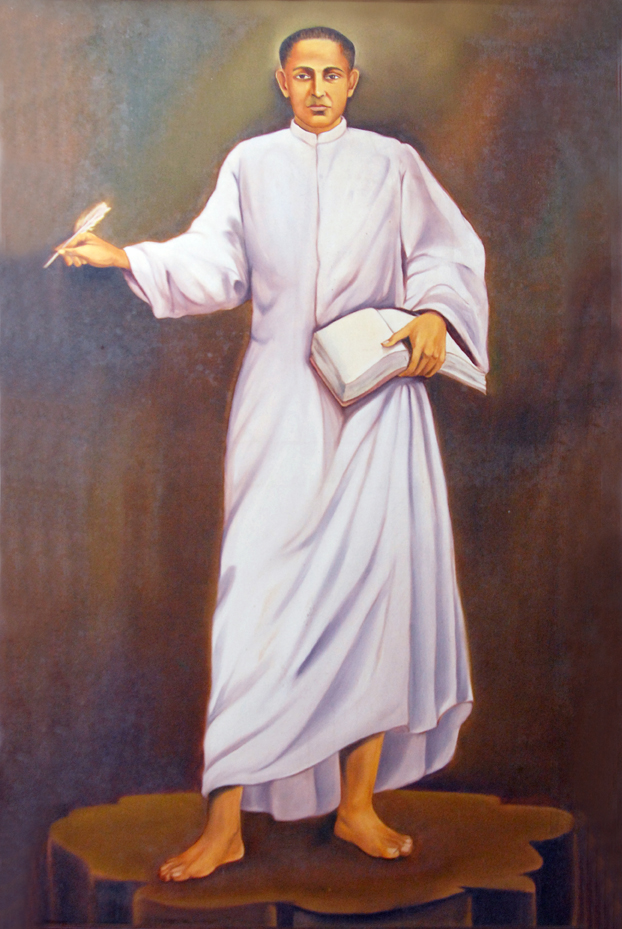 Palackal Thoma Malpan
 (1780-1841)
- Name in Syriac -
 Palackal Thoma Malpan (1780-1841)
 - Life History - Born In Pallipuram , ordained priest and secretary to the Apostle Vicar of Verapoly.Rector of Pallipuram Seminary and Founder of the first indigenious seminary for St. Thomas Christians in Kerala. Associated with saintly Porukara Thoma Malpan and St. Kuriakose Elias Chavara in the foundation of the congregation of the of the Carmilite of Mary Immaculate (CMI)
- Remembrance Day - 16 January
-
Brief History - Palackal Thoma Malpan (പാലയ്ക്കല് തോമ്മാ മല്പാന് / பாலய்க்கல் தோமா மல்பான் / पालय्क्कल् तोमा मल्पान्) (b. circa * 1780 at (South) Pallippuram (തെക്കന്) പള്ളിപ്പുറം / ചേന്നംപള്ളിപ്പുറം / ഐരാണിക്കുളം), near Shertallay (ചേര്ത്തല / കരപ്പുറം), in Alleppey (ആലപ്പുഴ), Kingdom of Travancore (തിരുവിതാംകൂര് രാജ്യം); d. there, † 16th January 1841) was an illustrious secular priest (ഇടവകപ്പട്ടക്കാരന്) from the Catholic Church of St. Thomas (Syro-Malabar Church) then under the Vicariate-Apostolic of Verapoly (വരാപ്പുഴ) and later under the Archdiocese of Ernakulam (എറണാകുളം) ; the senior founder of the first Cœnobite order of the St. Thomas Christians, the Third Order of Carmelites Discalced (കര്മ്മലീത്ത നിഷ്പാദുക മൂന്നാം സഭ / Carmelites of Mary Immaculate); and the founder and Rector of the first Seminary run by the St. Thomas Christians, first at Pallippuram and later at Mannanam (മാന്നാനം) near Kottayam (കോട്ടയം). (The title Malpan, from the Syriac word malpānā, denotes his status as a preceptor of priests.)
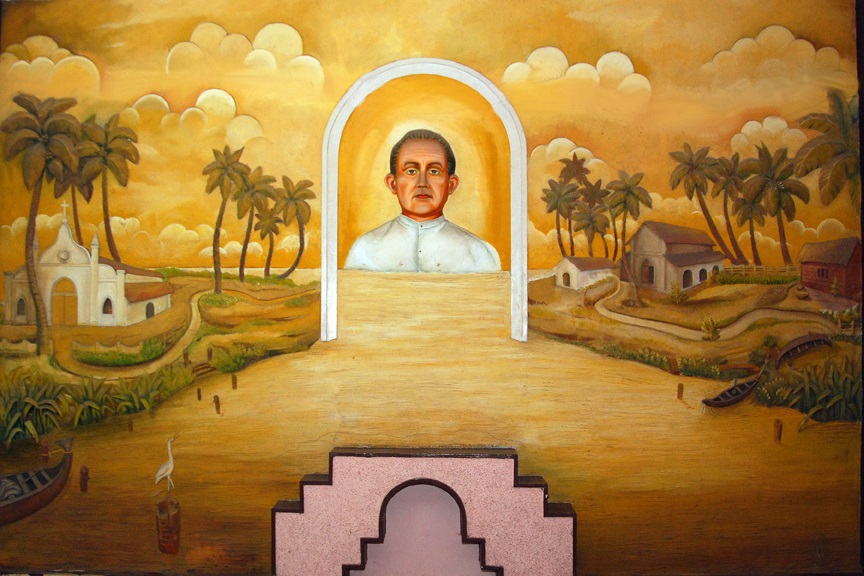 Palackal Thoma Malpan and the serenity of Pallipuram - Mural by Artist Samuel
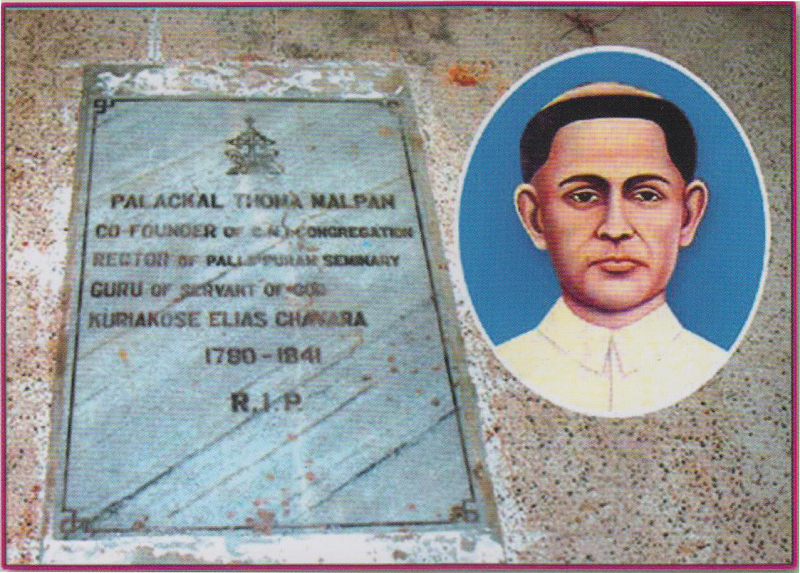 Cenotaph of Palackal Thoma Malpan (1780-1841)
After his ordination in 1807 consequent to studies under Thachil Abraham Malpan (തച്ചില് അവുറാഹാം മല്പാന്) (the younger brother of Thachil Thariyath Matthoo Tharakan, Esq. (തച്ചില് തരിയതു് മാത്തു തരകന് അവര്കള്)), he was appointed the Secretary for the St. Thomas Christians and Counsellor to the Bishop Mgr. Raymond Roviglia of St. Joseph, O. C. D., Vicar-Apostolic during 1803-1815; he continued to be a counsellor to the Vicars-Apostolic for the rest of his life, even after he resigned the position of Secretary in 1815.
As secretary and counsellor, he was instrumental to several reforms in the Catholic Church of Kerala: the practice of St. Thomas Christian priests and seminarians wearing cassocks (ളോവ) was introduced (previously, they had dressed in a way resembling the Jacobite clerics); the custom of episcopal visits (വിസീത്ത) to parishes was begun; the confessional (കുമ്പസാരക്കൂടു്) was made obligatory in all churches; walled cemeteries (സെമിത്തേരി) were built for all churches (earlier, the dead had been buried in the open compound); and confraternities (കൊമ്പിരിയാ, ദര്ശനസമൂഹം) were started in the St. Thomas Christian churches borrowing the custom from the Latin churches in Kerala; the confreres (ദര്ശനക്കാര്) assisted the orderly conduct of solemn feasts (കൊമ്പിരിയാപ്പെരുന്നാള്, ദര്ശനപ്പെരുന്നാള്), funerals, and other ceremonies.
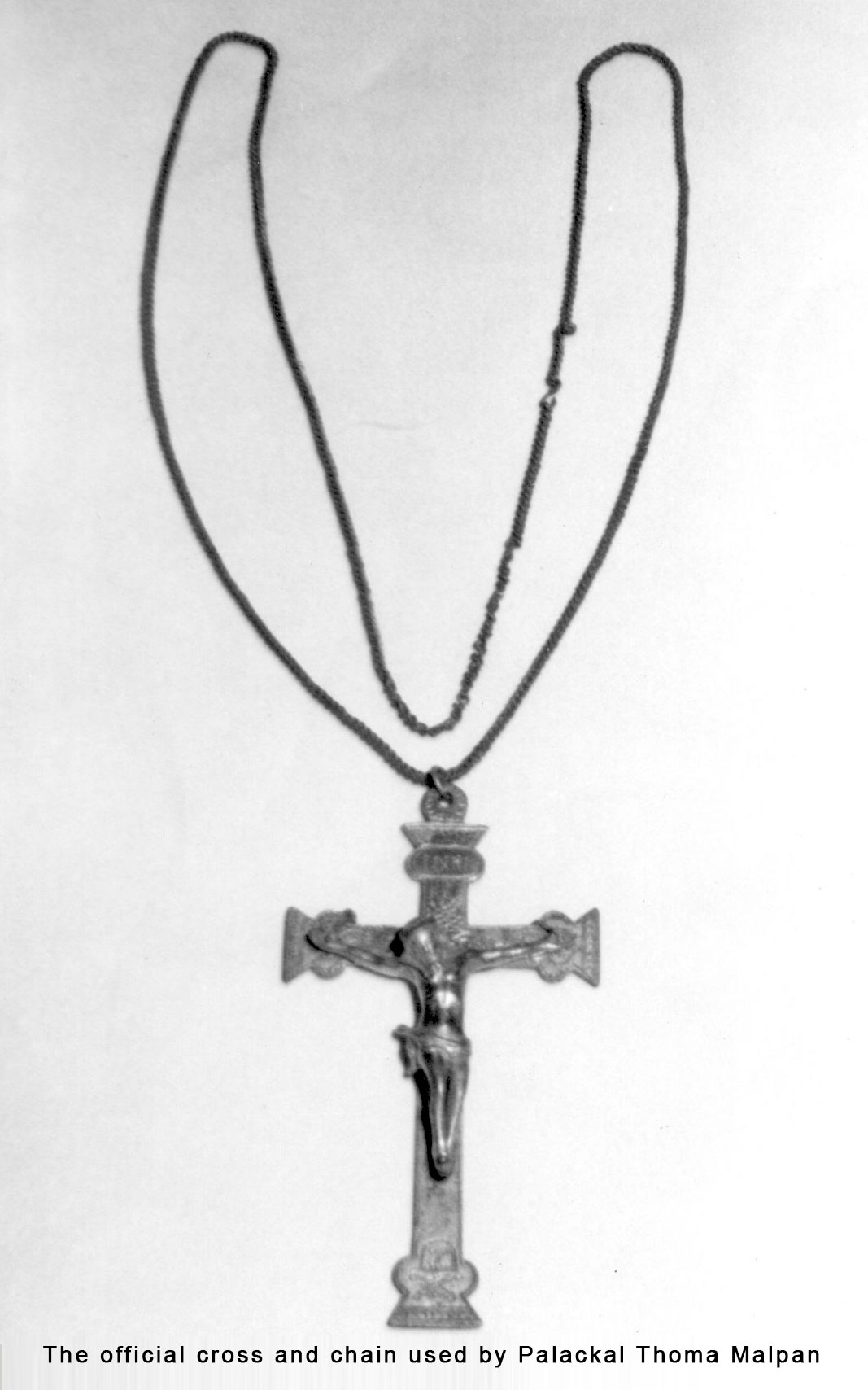 After leaving the position of secretary, he returned to Pallippuram in 1818. Since there were several acolytes desirous of studying for priesthood under him, the Malpan was compelled to start a seminary at Pallippuram, with Mangalath Chandy (മംഗലത്തു് ചാണ്ടി) of Pallippuram, later secretary and counsellor at Verapoly, as the first student. Among the first to join his seminary was Chavara Kuriakose (ചാവറ കുരിയാക്കോസ്) (1805-1871) of Kainakary (കൈനകരി), later Vicar-General for the St. Thomas Christians at Verapoly, then aged 13; the Malpan brought him up as if he were a son and considered him the spiritual heir. Seeking to bring order to the seminary, he wrote a regula (ക്രമച്ചട്ടം) for the seminarians, following it himself more stringently than all else. Even otherwise, he had kept an austere routine and diet from his early years.
Left Image - Crucifix at Pallippuram received by the Malpan from the Vicar-Apostolic of Verapoly.
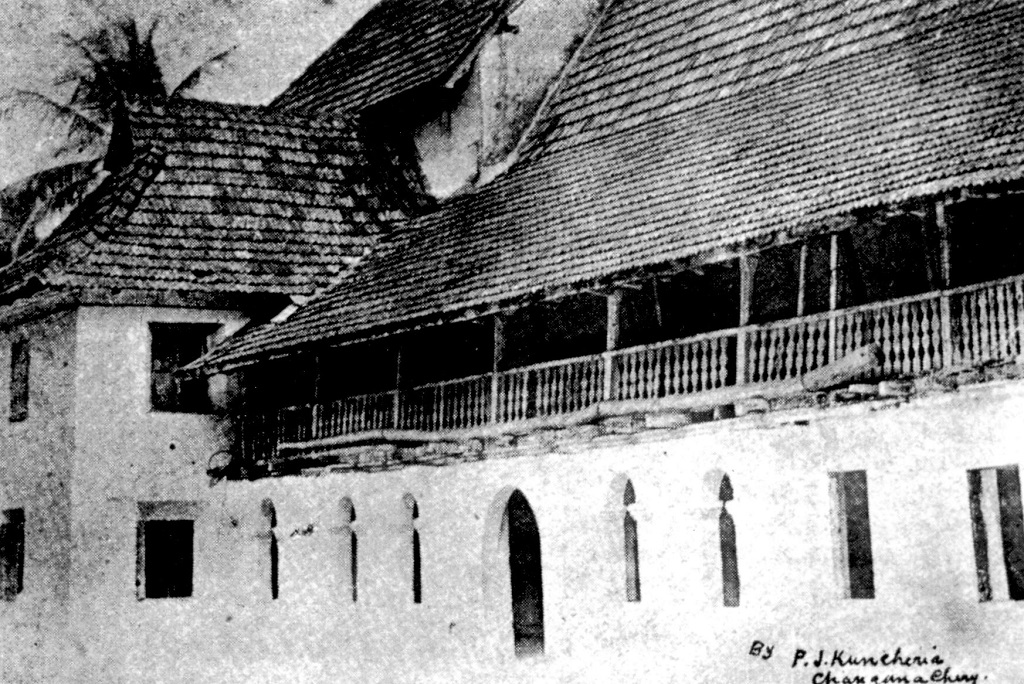 The Old Pallipuram Seminary - The first seminary run by St. Thomas Christians founded by Palackal Thoma Malpan
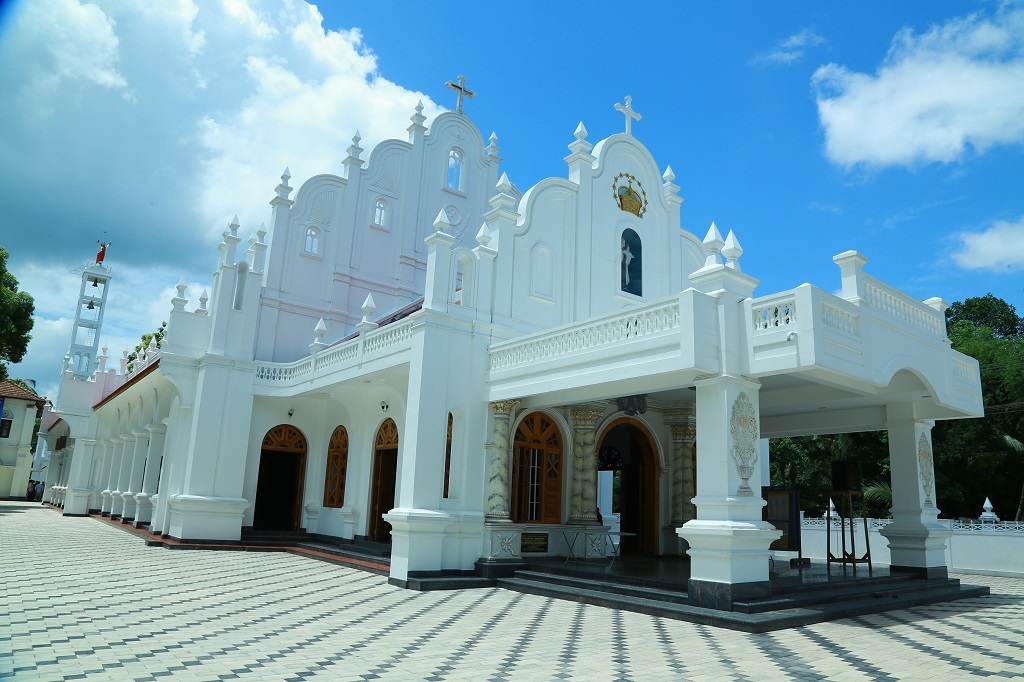 The Newly Reconsecrated Pallipuram St. Mary's Forane Church in 2016
Considering teaching and scholarship as his vocation, the Malpan devoted his life to that aim. He took particular care that his seminary had an exemplary collection of books, especially modern books in Tamil and the few in Malayalam, printed chiefly by members of the Society of Jesus. He had a special interest in languages. Learning Tamil on his own, he translated the spiritual books in Tamil into Malayalam; as a consequence he began to be called in jest the `Tamil Malpan' (പാണ്ടി മല്പാന്). He asked his students to scribe all the books they considered valuable, including liturgical books in Syriac. These may have inspired his disciple Fr. Chavara to start a Malayalam printing press at Mannanam, only the third of its kind in Kerala, in 1844. The Malpan also took every care to have his abler students learn other languages such as Latin, sometimes from European priests.
Since his early years the Malpan seems to have cherished the notion of a Cœnobite order of the Dominican kind; his experiences in running the seminary might have strengthened the resolve. In this endeavour he found an eager and able collaborator in Porukara Thoma Kathanar (പോരൂക്കര തോമ്മാ കത്തനാര്) (1799-1846) of Kalloorkad (കല്ലൂര്ക്കാടു്), Champakulam (ചമ്പക്കുളം) (to which the Malpan's maternal family, Puthenpurackal (പുത്തന്പുരയ്ക്കല്), also belonged), who had known and admired the Malpan since his days as a seminarian. As for Fr. Chavara, as he says in his Chronicles (നാളാഗമങ്ങള്), he had always been of one mind with his Malpan in all matters. With the blessing of the Bishop Mgr. Maurelio Stabellini, O. Carm., Vicar-Apostolic during 1828-1831, the Monastery (കൊവേന്ത) was founded at Mannanam on 11th May 1831.
Two years later, the Malpan started a seminary at Mannanam to teach priests both secular and religious; a new movement in the spiritual formation of St. Thomas Christian clergy, this became the cradle for several priests and bishops such as Mar Louis Pareparambil (പഴേപറമ്പില് മാര് ളൂയീസ്), Mar Matthew Makil (മാക്കീല് മാര് മത്തായി), and Mar Augustine Kandathil (കണ്ടത്തില് മാര് ആഗസ്തീനോസ്), from the St. Thomas Christians.
He passed away in 1841 and was buried at the main altar in the Forane Church of St. Mary, Pallippuram (connected by tradition with the apostolate of St. Thomas in South India); judging from the account of Fr. Chavara, the funeral was worthy of a bishop.
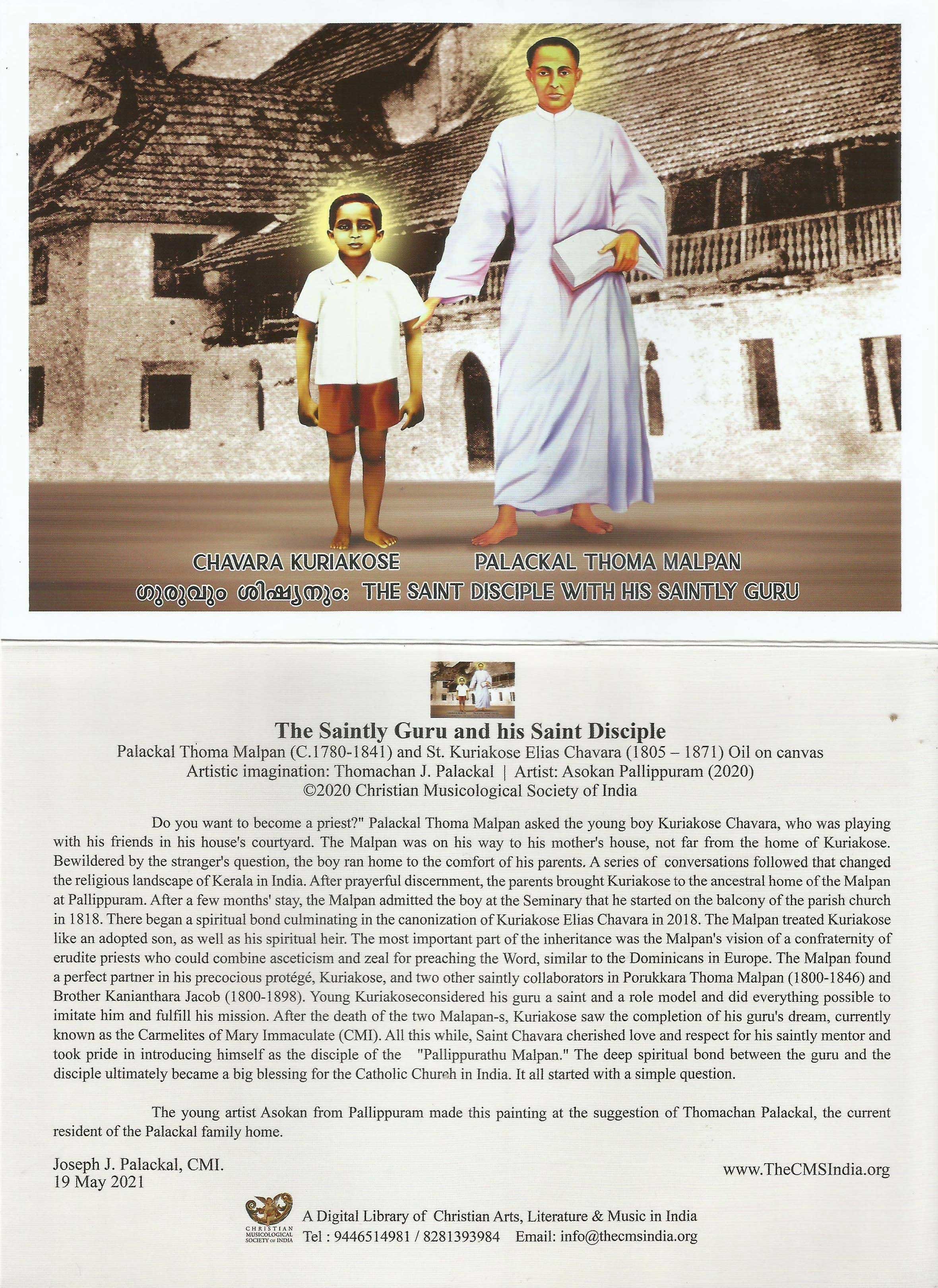
The Saintly Guru and his Saint Disciple
Palackal Thoma Malpan (C.1780-1841) and St. Kuriakose Elias Chavara (1805 — 1871) Oil on canvas
Artistic imagination: Thomachan J. Palackal I Artist: Asokan Pallippuram (2020) ©2020 Christian Musicological Society of India
Do you want to become a priest?" Palackal Thoma Malpan asked the young boy Kuriakose Chavara, who was playing with his friends in his house's courtyard. The Malpan was on his way to his mother's house, not far from the home of Kuriakose. Bewildered by the stranger's question, the boy ran home to the comfort of his parents. A series of conversations followed that changed the religious landscape of Kerala in India. After prayerful discernment, the parents brought Kuriakose to the ancestral home of the Malpan at Pallippuram. After a few months' stay, the Malpan admitted the boy at the Seminary that he started on the balcony of the parish church in 1818. There began a spiritual bond culminating in the canonization of Kuriakose Elias Chavara in 2018. The Malpan treated Kuriakose like an adopted son, as well as his spiritual heir. The most important part of the inheritance was the Malpan's vision of a confraternity of erudite priests who could combine asceticism and zeal for preaching the Word, similar to the Dominicans in Europe. The Malpan found a perfect partner in his precocious protégé, Kuriakose, and two other saintly collaborators in Porukkara Thoma Malpan (1800-1846) and Brother Kanianthara Jacob (1800-1898). Young Kuriakoseconsidered his guru a saint and a role model and did everything possible to imitate him and fulfill his mission. After the death of the two Malapan-s, Kuriakose saw the completion of his guru's dream, currently known as the Carmelites of Mary Immaculate (CMI). All this while, Saint Chavara cherished love and respect for his saintly mentor and took pride in introducing himself as the disciple of the "Pallippurathu Malpan." The deep spiritual bond between the guru and the disciple ultimately became a big blessing for the Catholic Church in India. It all started with a simple question.
The young artist Asokan from Pallippuram made this painting at the suggestion of Thomachan Palackal, the current resident of the Palackal family home.
Joseph J. Palackal, CMI.
www.TheCMSlndia.org
19 May 2021
Tel : 9446514981 / 8281393984 Email:
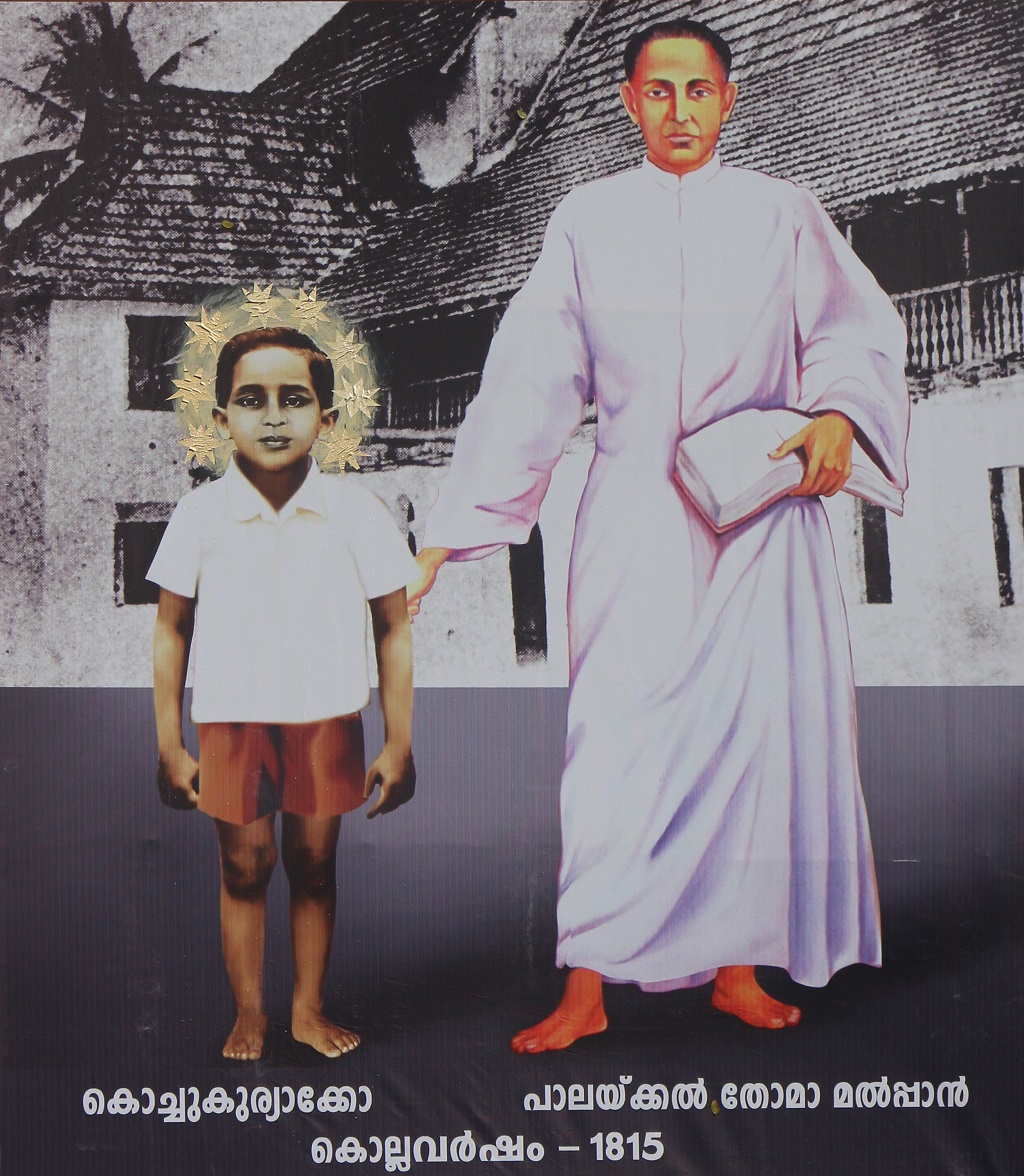
പാലയ്ക്കൽ തോമാ മൽപാനും ശിഷ്യൻ കൊച്ചു കുരിയാക്കോസും (കൊല്ലവർഷം 1815)
Palackal Thoma Malpan with his disciple Kochu Kuriakose at the Old Pallipuram Seminary (b. circa 1815)
 ബഹുമാനപ്പെട്ട ഞങ്ങളുടെ പള്ളിപ്പുറത്തെ പാലയ്ക്കൽ തൊമ്മായെന്ന പെരു വിളിക്കപ്പെട്ട മൽപാനച്ചനോടുകൂടെ പഠിച്ചതിൽ ഒരുത്തൻ കുറയപ്പെട്ടവൻ ചാവറ കുറിയാക്കോസ് കത്തനാര് എഴുതിയത്.
എത്രയും പെ: ബ: ലഒപ്പൊല്ദ എന്ന മൂപ്പച്ചനെ പുത്തൻ സന്യാസിയുടെ ഗുരുവും കൊമെന്തക്കാർക്ക് ഒക്കെയും വികാരി പ്രൊവിൻസിയാൽ ആകുന്ന പെ: ബ: മെത്രാപ്പോലീത്തച്ചന്റെ പെർക്കുള്ള ദേലഗാദ ആയിട്ടും കല്പിച്ച, അദ്ദേഹം ഭരിച്ചു നടത്തി വരുമ്പോൾ 1864 മകരം 12 നു ഞാനും ഈ കൂനമ്മാവ് കൊവേന്തയിൽ വന്ന പാർത്തിരിക്കയിൽ ഈ 12 നു 8 മണിക്ക് കൊവേന്തയിൽ കൂടിയിരിക്കുന്നവരുടെയും മരിച്ചു പോയവരുടെയും പേരും നാടും ഇടവക മുതലായ ചില വിവരങ്ങളും ചോദിപ്പാനായിട്ടു എന്നെ അദ്ദേഹത്തിന്റെ മുറിയിൽ വിളിച്ചു ചോദിച്ചപ്പോൾ നമ്മുടെ കൊവേന്തയ്ക്കു അടിസ്ഥാനക്കാരനായ പെ: ബ: പള്ളിപ്പുറത്തെ മാല്പനച്ചന്റെ പേരും വിവരവും ചോദിച്ചപ്പോൾ ഞാൻ അറിഞ്ഞിരിക്കുന്ന ചില വർത്തമാനങ്ങൾ പറഞ്ഞപ്പോൾ നമ്മുടെ കാരണവർ ആയിരിക്കയാലും അദ്ദേഹം ഏറിയ വേലകൾ ഒക്കെയും ചെയ്തിരിക്കകൊണ്ടും പിൻവരുന്നവർക്ക് ഒരു ഓര്മയുണ്ടാകുവാനായിട്ടു ഇയാളിന്റെ വർത്തമാനങ്ങൾ അറിയുന്നതൊക്കെയും ഒന്ന് എഴുതിക്കണമെന്നും ആയതിനുവേണ്ടിയ ഒത്താശകൾ ഒക്കെയും ഞാൻ ചെയ്യണമെന്ന് പെ: ബ: മൂപ്പച്ചൻ കല്പിച്ചു ........................ Read More
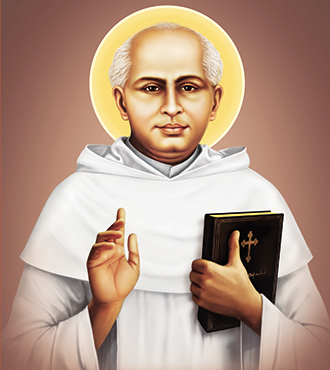 Saint Kuriakose Elias Chavara C.M.I.
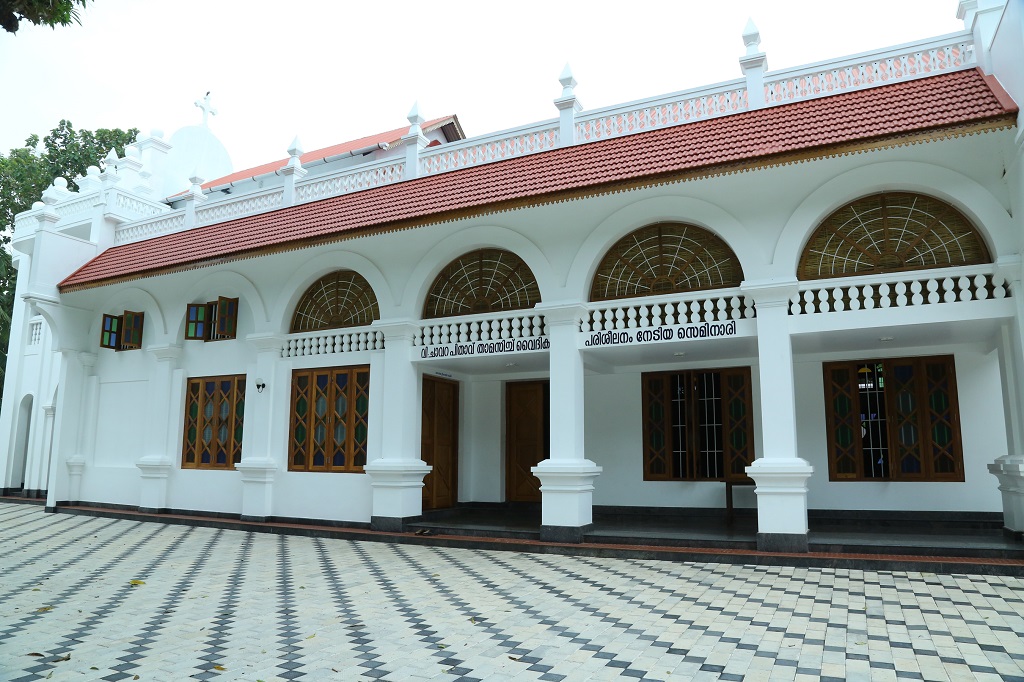 New Pallipuram Seminary dedicated to St. Chavara
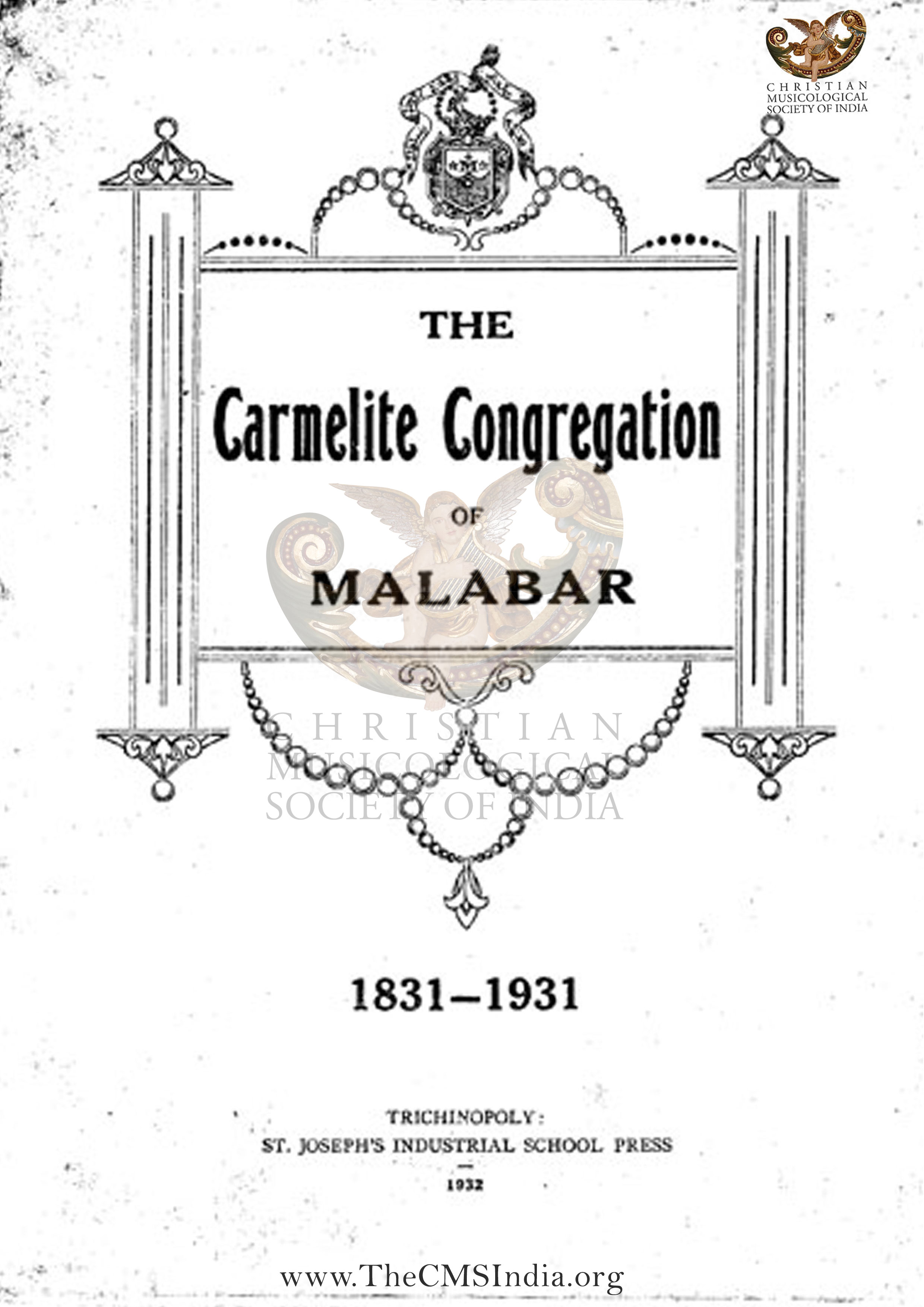 The Carmelite Congregation of Malabar (1831-1931) Centenary Souvenir
The Two Founders of the Congregation beginnings of the Mother-House. 1.It was the beginning of of the 19th century; the famine and plague that followed Tippu Sultan’s invasion of Malabar had just subsided. The schismatic Syrians, owing to their too close contact with Protestant Missionaries, began gradually to be protestantized. Disobedience to the mandates of the Holy See was about to give rise to the notorious Padroado schism in the churches under the Portuguese Patronage. The Syrian Catholics of Malabar, however, as a body kept imperturbably of the apostolic See. There was, however, among them much room for improvement and progress. .... To Read More
Courtesy - Wilson Muriyadan
What do they say
പാലയ്ക്കൽ തോമാ മല്പാന് അച്ഛന്റെ ചരിത്രം
 |
 |
പുണ്യവാൻ ഉറങ്ങുന്ന പള്ളിപ്പുറം പള്ളി
|
|
 |
|
|
|
പുണ്യചരിതനായ പാലയ്ക്കൽ തോമാ മല്പാന്
|
|
|
.
|
|
|
പുണ്യചരിതനായ പാലയ്ക്കൽ തോമാ മല്പാന് - 2016 ലെ പതിപ്പ്
|
|
|
.വിശുദ്ധ ചാവറാച്ചനും പള്ളിപ്പുറവും
|
|
|
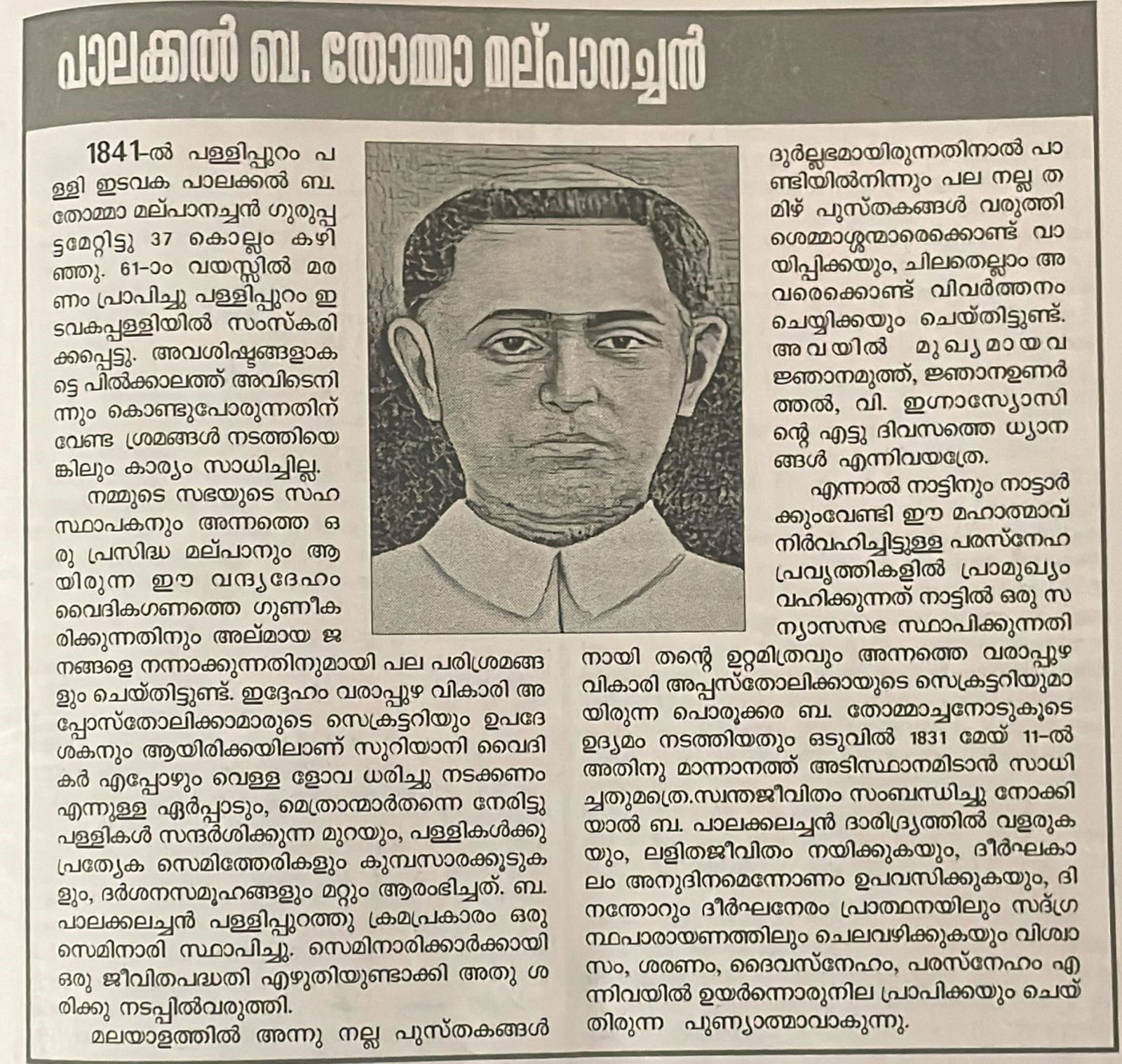
പാലക്കൽ ബ തോമ്മാ മല്പാനച്ചൻ - കർമ്മല കുസുമം,January 2024
 |
|

